
Có thể bạn quan tâm: Cách Làm Giá Treo Quần Áo Hiệu Quả Và Tiết Kiệm Không Gian
Introduction: Why Precision Matters More Than Ever in 2026
In the rapidly evolving worlds of construction, automotive restoration, and high-end interior design, the simple act of measuring a door might seem rudimentary. Yet, in 2026, the margin for error has shrunk dramatically. With tighter tolerances in modern door frames, the integration of smart home systems, and the rising cost of premium materials, a miscalculation of just a few millimeters can lead to costly rework, compromised insulation, or aesthetic flaws that are difficult to rectify. This is where the practice known as đo cửa theo thước lỗ ban—literally “measuring the door according to the flange gauge” or “measuring the door using the ring/caliper standard”—becomes not just a technique, but a necessity.
As we navigate through 2026, homeowners, contractors, and DIY enthusiasts are increasingly relying on standardized measurement protocols to ensure compatibility with automated door systems, energy-efficient seals, and custom millwork. The phrase itself, đo cửa theo thước lỗ ban, originates from mechanical engineering traditions where “thước lỗ ban” (flange or ring gauge) is used to verify exact dimensions and clearances. Applied to door installation, it refers to the systematic use of calibrated gauges, calipers, and feeler tools to determine the precise gap between a door and its frame, the thickness of the door itself, and the alignment of hinges and locks. In this comprehensive guide, we will delve deep into the methodology, tools, and 2026 best practices surrounding this essential skill.
The Anatomy of a Door Measurement: Breaking Down the Components
Before any tool touches the surface, understanding what exactly needs to be measured is crucial. A door is not a monolithic object; it is a system of interacting parts, each with its own dimensional requirements. In 2026, the standard approach involves three primary measurement categories: overall dimensions, clearance gaps, and structural tolerances.
Overall Dimensions
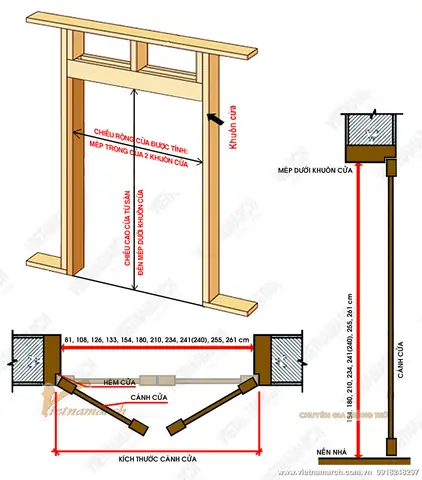
The first step in đo cửa theo thước lỗ ban is determining the door’s width, height, and thickness. While a simple tape measure can provide the width and height, thickness requires more precision. In modern construction, doors are often specified in millimeters rather than inches, especially when dealing with imported European-style frames or automated sliding systems. A digital caliper or a precision thickness gauge is the tool of choice here. In 2026, digital calipers with Bluetooth connectivity are the “latest” trend, allowing measurements to be instantly logged to a smartphone app for record-keeping and comparison.
Clearance Gaps
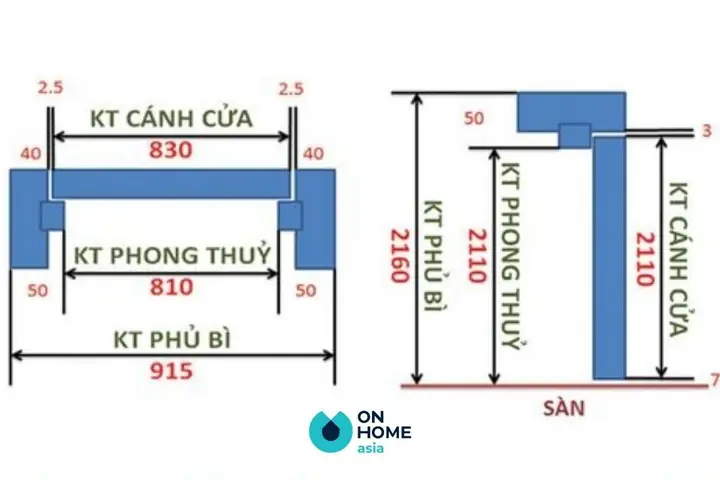
The “gap” or “clearance” is the space between the door edge and the frame, as well as the gap between the door bottom and the threshold. These gaps are critical for two reasons: functionality and energy efficiency. If the gap is too wide, drafts enter, noise penetrates, and the door may swing or slide unevenly. If the gap is too narrow, the door may rub against the frame, causing wear, misalignment, or even failure of automatic operators. The thước lỗ ban concept shines here, as ring gauges can be slipped over the door edge to instantly tell the installer whether the clearance falls within the acceptable range (typically 2–4 mm for side gaps and 8–12 mm for the bottom, depending on the door type).
Structural Tolerances
Beyond the visible gaps, structural tolerances involve the alignment of hinge mortises, lock bore holes, and the door’s squareness. A door that is not perfectly rectangular will experience uneven stress when opened or closed, leading to premature sagging or locking difficulties. In 2026, laser alignment tools and digital square gauges have become the “newest” standard, but the fundamental principle of using a calibrated gauge to verify tolerances remains unchanged.
Essential Tools for ‘Đo Cửa Theo Thước Lỗ Ban’ in 2026
The toolkit for accurate door measurement has evolved significantly. While the core concept of using a gauge to verify dimensions persists, the instruments themselves have embraced digital technology, ergonomic design, and connectivity. Below, we explore the essential tools that define the 2026 landscape.
1. Digital Calipers with Auto-Zero and Bluetooth
Digital calipers are the backbone of any measurement toolkit. In 2026, the latest models feature auto-zero functions, allowing the user to set the baseline at any point, and Bluetooth connectivity that streams data to a companion app. When performing đo cửa theo thước lỗ ban, a digital caliper can measure door thickness with a precision of ±0.02 mm, far surpassing the accuracy of traditional metal rulers. Popular 2026 releases from brands like Mitutoyo, Starrett, and generic but highly rated Chinese manufacturers offer models under $50 that rival professional-grade tools of the past.
2. Feeler Gauge Sets
Feeler gauges remain indispensable for checking small clearances. A typical set includes leaves of varying thickness, ranging from 0.05 mm to 1.0 mm or more. In the context of door measurement, feeler gauges are used to test the side and bottom gaps. The technique involves inserting a gauge of the suspected thickness into the gap; if it slides in with slight resistance, the measurement is confirmed. In 2026, coated feeler gauges that resist corrosion and provide smoother sliding are the “latest” improvement, ensuring longevity even in humid construction environments.
3. Ring Gauges (Thước Lỗ Ban)
The namesake tool of our discussion, the ring gauge, is a circular gauge with an internal diameter precisely machined to a specific size. In door measurement, ring gauges are slipped over the door edge or over hinge pins to verify that the dimensions match the design specification. If the ring slides on too easily, the tolerance is too wide; if it doesn’t fit at all, the tolerance is too narrow. In 2026, adjustable ring gauges made from hardened stainless steel with laser-etched size markings are the “newest” trend, allowing a single tool to cover a range of sizes rather than requiring a whole set of fixed gauges.
4. Laser Distance Meters
For overall width and height, laser distance meters have largely replaced tape measures in professional settings. These devices emit a laser beam to a target and calculate the distance based on the time of flight. In 2026, the latest laser meters offer accuracy within ±1.5 mm and can measure up to 50 meters with a single button press. When measuring large sliding doors or double-entry systems, a laser meter combined with a digital angle finder provides a level of precision that tape measures simply cannot match.
5. Digital Angle Finders and Squares
Squareness is a critical factor in door measurement. A door that is out of square by just a few degrees will not close properly. Digital angle finders, which use accelerometer technology, provide instant readings of the angle between the door edge and the frame. In 2026, many angle finders also feature hold functions, backlit displays for low-light job sites, and the ability to store multiple angle readings for complex installations.
Có thể bạn quan tâm: Hướng Dẫn Chọn Mua Vòi Nước Rửa Bát Hiệu Quả Cho Năm 2026: Top Sản Phẩm Tốt Nhất Hiện Nay
Step-by-Step Protocol: How to Perform ‘Đo Cửa Theo Thước Lỗ Ban’ Correctly
With the right tools in hand, the next phase is executing the measurement process systematically. The following protocol is designed for accuracy, repeatability, and ease of use, reflecting the standards upheld across the industry in 2026.
Step 1: Prepare the Work Area
Ensure the door is fully open or removed from its hinges, resting on a stable, flat surface. If the door is installed, clear the surrounding area of obstructions and ensure the floor is level. Dust, debris, or an uneven surface can skew measurements, especially when using feeler gauges or calipers.
Step 2: Measure Overall Width and Height
Using a laser distance meter or a high-quality tape measure, record the door’s width at the top, middle, and bottom, as well as the height at the left, center, and right. In 2026, it is standard practice to take three readings for each dimension and calculate the average. This accounts for any warping or irregularities in the door itself. Record all measurements in millimeters for consistency, especially if the data will be shared with manufacturers or software for custom fabrication.
Step 3: Determine Door Thickness
Select a digital caliper and measure the thickness at multiple points across the door’s width and height. Doors can vary slightly in thickness due to manufacturing tolerances or moisture-induced swelling. In 2026, calipers with a large LCD display and the ability to switch between metric and imperial units are recommended. Note the thinnest and thickest readings; the difference will inform your gauge selection later.
Step 4: Check Side and Bottom Clearances
This is the core of đo cửa theo thước lỗ ban. Using feeler gauges or ring gauges, test the horizontal gaps on both sides of the door and the vertical gap at the bottom.
– For side gaps: Insert a feeler gauge of the suspected thickness (often starting with 2.0 mm) between the door edge and the frame. If it fits with light resistance, note the exact thickness. If it’s too loose, try a thinner gauge; if it doesn’t fit, try a thicker one. The goal is to find the gauge that provides a snug but not forced fit.
– For the bottom gap: Repeat the process, but remember that the bottom gap often requires a slightly larger clearance (typically 8–12 mm) to accommodate flooring variations and door sweep installation.
Step 5: Verify Hinge and Lock Alignment
Using a digital square or a combination square, check the alignment of the hinge mortises. The square should sit flush against the door edge and the frame reveal. Any gap indicated by the square’s blade signifies misalignment. Additionally, if the door includes a lock bore, use a ring gauge matching the lock’s diameter to verify that the bore hole is the correct size. In 2026, many lock manufacturers provide go/no-go gauges specifically for this purpose, ensuring that aftermarket locks fit without requiring extensive modification.
Step 6: Document and Compare
Finally, record all measurements in a standardized format. Many 2026 contractors use digital forms or apps that allow photo attachment, GPS tagging, and automatic calculations. Comparing your findings against the door manufacturer’s specifications and the frame manufacturer’s tolerances will immediately reveal whether the door is within acceptable limits or if adjustments are needed.
Common Mistakes and How to Avoid Them Even in 2026
Despite the availability of sophisticated tools, human error remains the most common source of measurement inaccuracy. Here are the most frequent pitfalls encountered during đo cửa theo thước lỗ ban, and how to sidestep them.
1. Measuring on an Uneven Surface
A door warped or placed on an uneven floor will yield inaccurate gap readings. Always ensure the door is supported on a flat, stable platform. If the door is installed, use shims to level it before measuring.
2. Using Worn or Damaged Gauges
A feeler gauge with a burred edge or a caliper with a sprung joint will provide misleading readings. In 2026, the “latest” maintenance advice emphasizes regular inspection of gauges. If a feeler gauge leaf bends easily or a caliper’s jaws no longer close perfectly flat, replace or recalibrate the tool. Many digital calipers in 2026 come with a recalibration mode that zeroes the instrument against a known standard.
3. Ignoring Environmental Factors
Temperature and humidity affect wood doors, causing expansion or contraction. A measurement taken on a humid summer day may differ from one taken in a climate-controlled workshop. In 2026, it is recommended to acclimate the door to the installation environment for at least 24 hours before taking final measurements. Note the ambient temperature and humidity in your records; this data can be invaluable for future adjustments or warranty claims.
Có thể bạn quan tâm: Phòng Bếp Chung Cư Đẹp Năm 2026: Lộ Trình Thiết Kế, Xu Hướng Mới Và Lời Khuyên Cho Dân Nội Thất
4. Relying on a Single Measurement Point
Taking a measurement at only one spot on the door’s width or height ignores potential warping. Always take at least three readings per dimension and document the range. The average may look perfect, but the range reveals the extent of irregularity.
5. Confusing Inside and Outside Dimensions
In door installation, the “reveal” (the visible frame width) differs from the “total width” (the door plus both reveals). Misinterpreting these can lead to ordering the wrong size. Clearly distinguish between the two in your notes, and when in doubt, measure both and label them explicitly.
Maintenance and Calibration: Keeping Your Tools 2026-Ready
The accuracy of đo cửa theo thước lỗ ban is only as good as the tools used to perform it. In 2026, tool maintenance has become a streamlined process, thanks to digital innovations and material improvements. However, the fundamentals remain unchanged.
Digital Calipers
- Battery Management: Always remove batteries when not in use for extended periods to prevent leakage corrosion. In 2026, many calipers feature low-battery warnings and auto-shutoff to conserve power.
- Cleaning: Wipe the jaws with a soft, dry cloth after each use. Avoid solvents that can damage the protective coating. If the jaws accumulate debris, use a gentle brush rather than blowing, which can push particles deeper.
- Calibration: Use a gauge block or a known-thickness feeler gauge to verify accuracy monthly. If the reading deviates, most 2026 digital calipers have a simple calibration function accessible via a button combination.
Feeler and Ring Gauges
- Corrosion Prevention: Store gauges in a dry environment, preferably in a padded case with a desiccant packet. In 2026, polymer-coated gauges offer better resistance to rust, but they still require care.
- Edge Inspection: Regularly check the edges of feeler gauge leaves under magnification. If nicks or burrs are present, use a fine file to smooth them, or replace the leaf.
- Ring Gauge Fit: For adjustable ring gauges, periodically check the locking mechanism to ensure it holds the diameter securely without slipping. A loose ring gauge is worse than no gauge, as it can give a false sense of compliance.
Laser Distance Meters and Angle Finders
- Lens Care: Keep the laser window and sensor clean. A microfiber cloth is ideal; avoid paper towels that can scratch the lens.
- Temperature Limits: Most 2026 laser meters operate within a specified temperature range (typically 0°C to 40°C). Extreme cold or heat can affect battery performance and measurement accuracy.
- Factory Reset: Once a year, perform a factory reset as outlined in the manual. This recalibrates internal sensors and clears any accumulated software glitches.
Market Review: Top Tools for ‘Đo Cửa Theo Thước Lỗ Ban’ in 2026
With the 2026 market saturated with options, selecting the right tools can be overwhelming. Below is a curated review of the most highly regarded tools for door measurement, focusing on performance, value, and the “latest” features that define the current year.
1. Mitutoyo 118 Series Digital Calipers (2026 Edition)
- Price Range: $85–$120
- Key Features: Absolute measurement system (no zero-setting needed), IP54 dust/water resistance, stainless steel construction, Bluetooth 5.0 connectivity for real-time data transfer to the Mitutoyo E-Database app.
- Pros: Unmatched accuracy (±0.02 mm), intuitive interface, durable build suitable for professional daily use. The 2026 edition introduces a larger, high-contrast LCD that remains readable in direct sunlight—a common pain point with earlier models.
- Cons: Premium pricing; the companion app, while functional, occasionally experiences connectivity drops in crowded job site Wi-Fi environments.
- Verdict: The gold standard for professionals who demand precision and reliability. Ideal for the critical thickness and gap measurements central to đo cửa theo thước lỗ ban.
2. GENERPOWER Feeler Gauge Set, 32 Leaves (2026 Release)
- Price Range: $15–$25
- Key Features: Leaves made from 65Mn spring steel with a corrosion-resistant coating, laser-etched size markings, a robust plastic case with labeled compartments.
- Pros: Exceptional value for money. The 2026 release added a protective coating that significantly reduces rust formation, a common issue with budget feeler gauges. The range (0.05–1.0 mm) covers virtually all door clearance needs.
- Cons: The plastic case, while durable, is not as rugged as a metal box; users in harsh environments may prefer aftermarket cases.
- Verdict: An essential addition to any toolkit. For DIYers and small contractors, this set provides the precision needed for feeler gauge testing without breaking the bank.
3. General Tools RG-100 Adjustable Ring Gauge Kit
- Price Range: $40–$60
- Key Features: Adjustable range from 50 mm to 150 mm, hardened stainless steel construction, precision-machined internal surface with laser-etched markings, quick-release lever for size adjustment.
- Pros: Versatility is the standout feature. A single RG-100 can replace an entire set of fixed ring gauges, reducing tool clutter and cost. The 2026 model features an ergonomic handle that makes slipping the gauge over door edges smoother and faster.
- Cons: While accurate within ±0.1 mm, it may not satisfy those requiring the extreme precision of calibrated fixed gauges for high-tolerance automotive applications.
- Verdict: Perfect for general door measurement, frame alignment, and quick checks. The adjustability makes it the “latest” favorite among contractors who value efficiency.
4. Bosch GLM 50 C Laser Distance Meter
- Price Range: $100–$130
- Key Features: Measurement range up to 50 meters, accuracy ±1.5 mm, Bluetooth connectivity for the Bosch MeasureOn app, integrated tilt sensor for area and volume calculations.
- Pros: Unbeatable speed for overall dimension measurement. The 2026 firmware update added a “door mode” that automatically calculates reveals and overhangs based on a few reference points, streamlining the workflow for door installers.
- Cons: Requires a clear line of sight; bright sunlight can sometimes wash out the laser dot, though the 2026 model’s enhanced visibility mode mitigates this.
- Verdict: The go-to tool for quick, accurate width, height, and distance measurements. Pair it with a tape measure for redundancy, but for most 2026 jobs, it stands alone.
5. Fluke 54 II Digital Angle Finder
- Price Range: $80–$110
- Key Features: ±0.1° accuracy, magnetic base for hands-free operation, rugged rubberized casing, hold function, and backlit display.
- Pros: Accuracy and ease of use are top-tier. The magnetic base is a game-changer when checking hinge alignment on metal doors or frames, as it holds the device in place without manual support. The 2026 model added a programmable tolerance alert that beeps if the angle exceeds a set threshold—highly useful for quality control.
- Cons: The display, while bright, can be difficult to read at extreme angles; users may need to reposition the device for optimal visibility.
- Verdict: An indispensable tool for verifying squareness and alignment. For anyone serious about đo cửa theo thước lỗ ban, the Fluke 54 II ensures that the door is not just the right size, but perfectly aligned.
Pricing, Reviews, and the “Should I Buy?” Decision in 2026
When it comes to purchasing measurement tools, the 2026 buyer is spoiled for choice, with a wide spectrum of prices reflecting varying levels of precision, durability, and smart features. Here’s a breakdown to help you decide based on your specific needs and budget.
Budget-Conscious Buyers (Under $50)
For homeowners tackling a single door installation or a DIY enthusiast, the GENERPOWER feeler gauge set and a basic digital caliper (many options under $30 from brands like iGaging or eTec) provide more than adequate accuracy. The feeler gauge set, in particular, is the most cost-effective way to master the đo cửa theo thước lỗ ban technique without investing in professional-grade equipment. Reviews from 2026 consistently praise the set’s value, noting that the coated leaves resist the rust that plagued earlier budget options. If you need a tape measure or laser distance meter, generic brands on major e-commerce platforms offer competent options for $20–$40, though they may lack the durability and precision of mid-range tools.
Mid-Range Professionals ($50–$150)
This segment is where the real value lies for serious contractors and frequent DIYers. A Mitutoyo or iGaging digital caliper ($80–$120) paired with the GENERPOWER feeler gauge set ($15–$25) and the General Tools RG-100 adjustable ring gauge kit ($40–$60) forms a comprehensive toolkit that covers all aspects of door measurement. In 2026, reviews highlight the Mitutoyo’s Bluetooth connectivity as a standout feature, allowing measurements to be logged instantly to a project management app, reducing paperwork and errors. The Bosch GLM 50 C laser distance meter ($100–$130) is also highly recommended for this budget tier, as its “door mode” and accuracy make it a worthy investment for anyone measuring multiple doors or large formats. Overall, the mid-range toolkit offers a balance of precision, durability, and smart features that justify the cost for those who measure doors regularly.

Có thể bạn quan tâm: Hướng Dẫn Chọn Mua Các Mẫu Giường Bọc Nệm Chất Lượng Năm 2026: Giá, Review, Xu Hướng Và Lịch Các Sự Kiện Nổi Bật
High-End Specialists (Over $150)
For professional installers, high-end renovation firms, or those working with custom or automated door systems, the investment exceeds $150 but delivers unparalleled performance. The Fluke 54 II digital angle finder ($80–$110) is often purchased alongside other tools, but when bundled with top-tier calipers and laser meters, the total easily surpasses $300. In 2026, reviews from master installers emphasize the Fluke’s tolerance alert feature as a time-saver during quality checks, preventing the need for re-measurement after a door is hung. Additionally, professional-grade laser meters from Leica or Hilti, though priced $300–$600, offer range extensions, tripod compatibility, and integration with building information modeling (BIM) software, which is increasingly relevant in 2026’s smart construction ecosystem. If your work involves custom millwork, high-end automated doors, or frequent client presentations where measurement data must be shared digitally, the high-end category is worth every penny.
The “Should I Buy?” Framework
To streamline your decision, ask yourself these three questions:
1. Frequency: How many doors will I measure in the next year? If the answer is “occasional,” stick to budget options. If “regular” or “daily,” mid-range is the sweet spot. If “constant” or “specialized,” go high-end.
2. Precision Requirements: Are you installing standard residential doors, or custom, imported, or automated systems? Standard doors tolerate a few millimeters of variance; custom or automated systems often require ±0.1 mm precision, necessitating mid-to-high-end tools.
3. Data Integration: Do you need to record and share measurements digitally? If yes, prioritize tools with Bluetooth or app compatibility, which are standard in 2026 but vary in implementation. Reading recent reviews on forums like DIY Stack Exchange or contractor Facebook groups can reveal which brands’ apps are most stable and user-friendly.
Emerging Trends: The Future of Door Measurement Beyond 2026
As we look slightly beyond the current year, the trajectory of đo cửa theo thước lỗ ban and door measurement overall is pointing toward greater automation, integration, and precision. The 2026 trends we’re seeing are just the tip of the iceberg.
1. AI-Powered Measurement Apps
In 2026, a handful of apps have begun using smartphone cameras and AI algorithms to estimate door dimensions by analyzing the perspective and known reference objects in the frame. While not yet replacing physical gauges for critical tolerances, these apps are excellent for preliminary assessments, rough ordering, or situations where tools are unavailable. By 2027, expect these to incorporate LiDAR scanning found in high-end smartphones, offering millimeter-level accuracy directly from the phone.
2. Internet of Things (IoT)–Enabled Gauges
Imagine a feeler gauge or ring gauge that wirelessly transmits its reading to a cloud-based dashboard, automatically flagging measurements that fall outside specified tolerances. In 2026, pilot projects from industrial tool manufacturers are exploring Bluetooth-enabled gauges that send data in real-time to a tablet carried by the installer. This integration allows for instant quality control, with supervisors receiving alerts if a gap is too wide or a thickness is out of spec, reducing the need for post-installation callbacks.
3. Augmented Reality (AR) Overlays
AR headsets or smartphone overlays are being tested to project “ideal” measurement guides onto the real world. For đo cửa theo thước lỗ ban, this could mean seeing a translucent ring gauge or feeler gauge projection onto the door edge, guiding the user to the correct insertion depth or angle. While still in the experimental phase in 2026, the potential for reducing human error, especially for apprentices, is significant.
4. Sustainability and Material Innovation
As the construction industry pushes toward greener practices, tool manufacturers are experimenting with recycled materials and modular designs that extend tool life. In 2026, some digital calipers feature replaceable jaws rather than requiring the entire unit to be replaced when wear occurs. Ring gauges are being produced from sustainably sourced hardened alloys that maintain precision longer while reducing the environmental footprint. This trend aligns with the broader movement toward a circular economy in tooling.
5. Integration with Smart Home Design Software
With the rise of smart doors—those equipped with sensors, auto-locking, and integration with home assistants—the initial measurement phase is becoming interconnected with software design. In 2026, some door manufacturers provide APIs that accept measurement data directly from calibrated digital calipers via Bluetooth, auto-populating the order form for a smart door system that matches the exact frame dimensions. This seamless handoff from measurement to production minimizes the gap between estimation and installation, a common source of delays in previous years.
Conclusion: The Art and Science of ‘Đo Cửa Theo Thước Lỗ Ban’ in the Modern Era
The practice of đo cửa theo thước lỗ ban encapsulates the perfect marriage of traditional craftsmanship and modern technology. What began as a mechanical engineering concept—using gauges to verify exact dimensions—has evolved into a multifaceted discipline that touches every aspect of door installation, from the initial measurement to the final alignment and everything in between. As we navigate through 2026, the tools at our disposal are more precise, more connected, and more user-friendly than ever before, yet the core principle remains unchanged: accuracy through standardization.
Whether you are a homeowner replacing a single entry door, a contractor overseeing a multi-unit renovation, or a master craftsman building a custom entryway, the techniques outlined in this guide provide a robust framework for achieving professional results. By understanding the components that need measurement, equipping yourself with the right tools for the 2026 landscape, following a systematic protocol, avoiding common pitfalls, and maintaining your equipment, you ensure that every door you measure and install fits perfectly, functions smoothly, and stands the test of time.
The investment in proper measurement tools and the discipline to use them correctly pays dividends not just in the immediate satisfaction of a well-hung door, but in the long-term savings of avoided callbacks, reduced material waste, and enhanced customer satisfaction. As smart home technology continues to integrate with our living spaces, the importance of getting the fundamentals—like door measurement—right only grows. In 2026 and beyond, đo cửa theo thước lỗ ban is more than a technique; it is a standard of excellence that separates the competent from the exceptional.
May your measurements be precise, your gaps consistent, and your installations flawless. Whether you’re just starting out on your first door project or you’re a seasoned professional looking to refine your toolkit, the principles outlined here serve as a timeless reference point in an ever-changing industry. Here’s to doors that open smoothly, close tightly, and fit perfectly—for years to come.


